
Portland Road Studios
Survey House
51 Portland Road
Kingston-upon-Thames
Surrey KT11 2SH Portland Road Studios, Survey House, 51 Portland Road, Kingston-upon-Thames, Surrey KT11 2SH
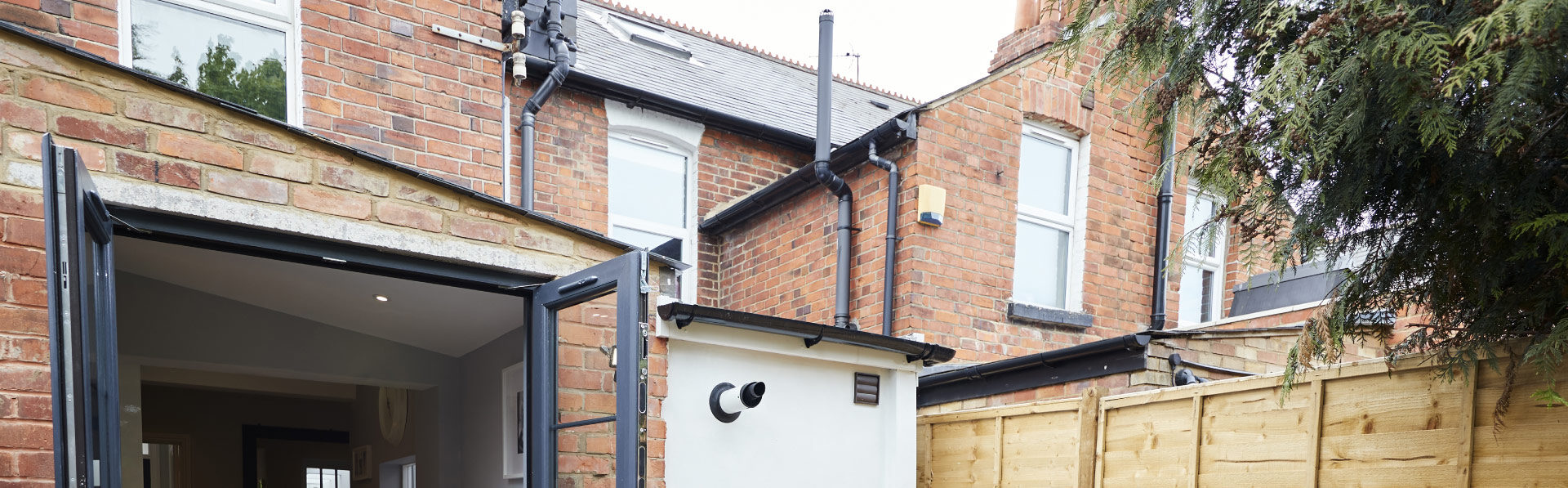
LOFT CONVERSION
The joists forming the floor of most roof spaces are not designed to withstand the weight of people and furniture. To convert a loft to accommodation, it is therefore necessary to construct a new floor and that is typically supported by beams spanning between the side walls. If the property is terraced or semi-detached at least one of those walls will be a party wall.
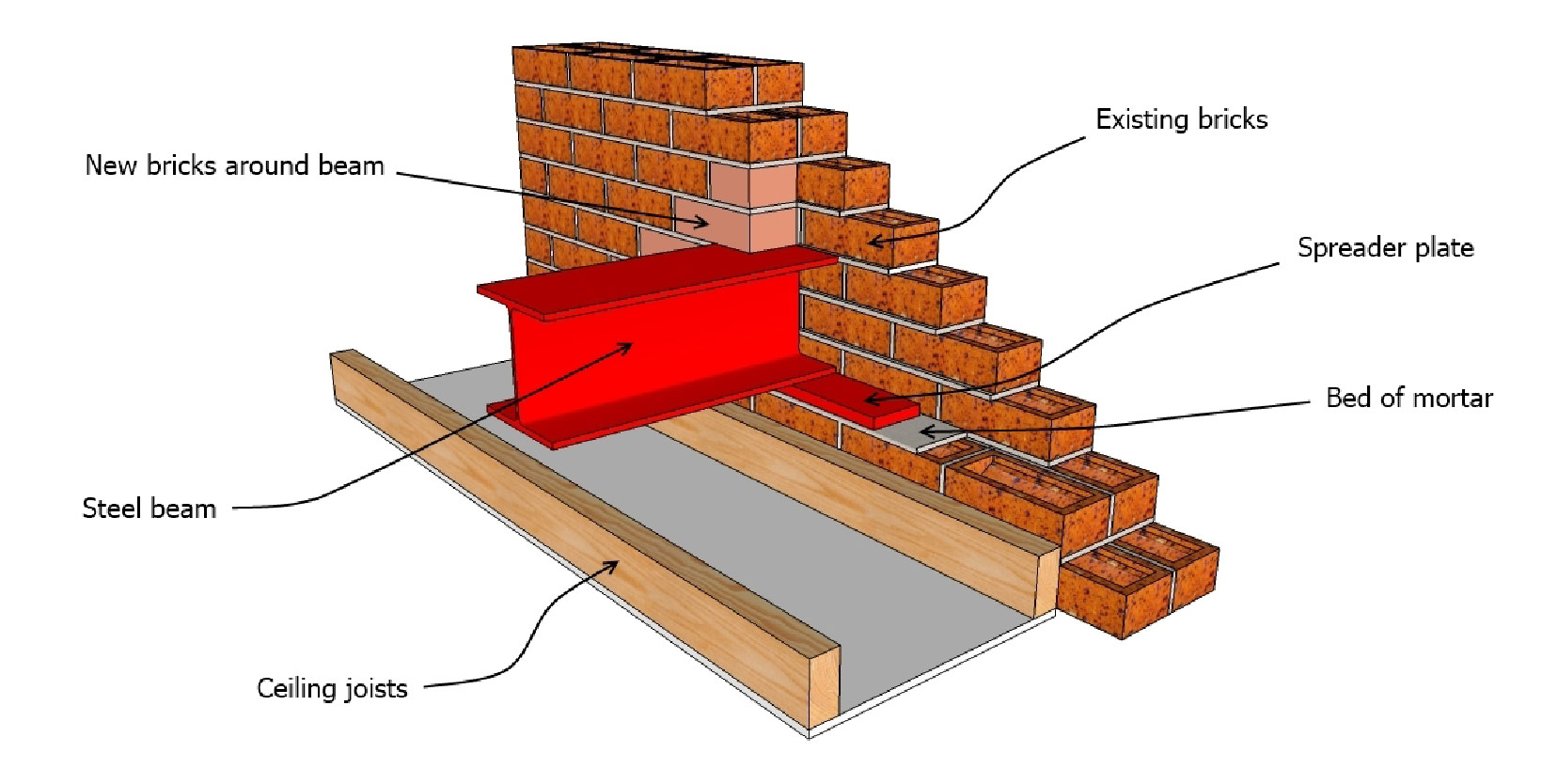
A pocket will be cut into the party wall to allow the beams and padstones spreader plates to be inserted and, if that is not done carefully, there’s a risk of either punching through to the other side or of surfaces being damaged by vibration. The risk can be reduced by undertaking the work with hand tools only and not cutting in to anymore than half the thickness of the wall.
To increase the volume of the converted space, the rear of the roof is generally squared off to create a ‘dormer’. A further beam will be cut in just below the ridge to support the roof of the dormer but there is also the position of the dormer sides to consider. The neatest solution, and the one that provides the most internal space, is to raise the party wall. However, that needs to be done in a way that is both attractive and allows the adjoining owner to enclose upon the wall in the future should they convert their loft.

Finally, if a party wall is to be temporarily exposed to the elements during the course of the works, as is often the case, it must be protected either with felt and battens or a temporary roof.
REAR EXTENSIONS
Some work covered by the Party Wall Act does not affect any existing party walls put still has the potential to cause damage and inconvenience.
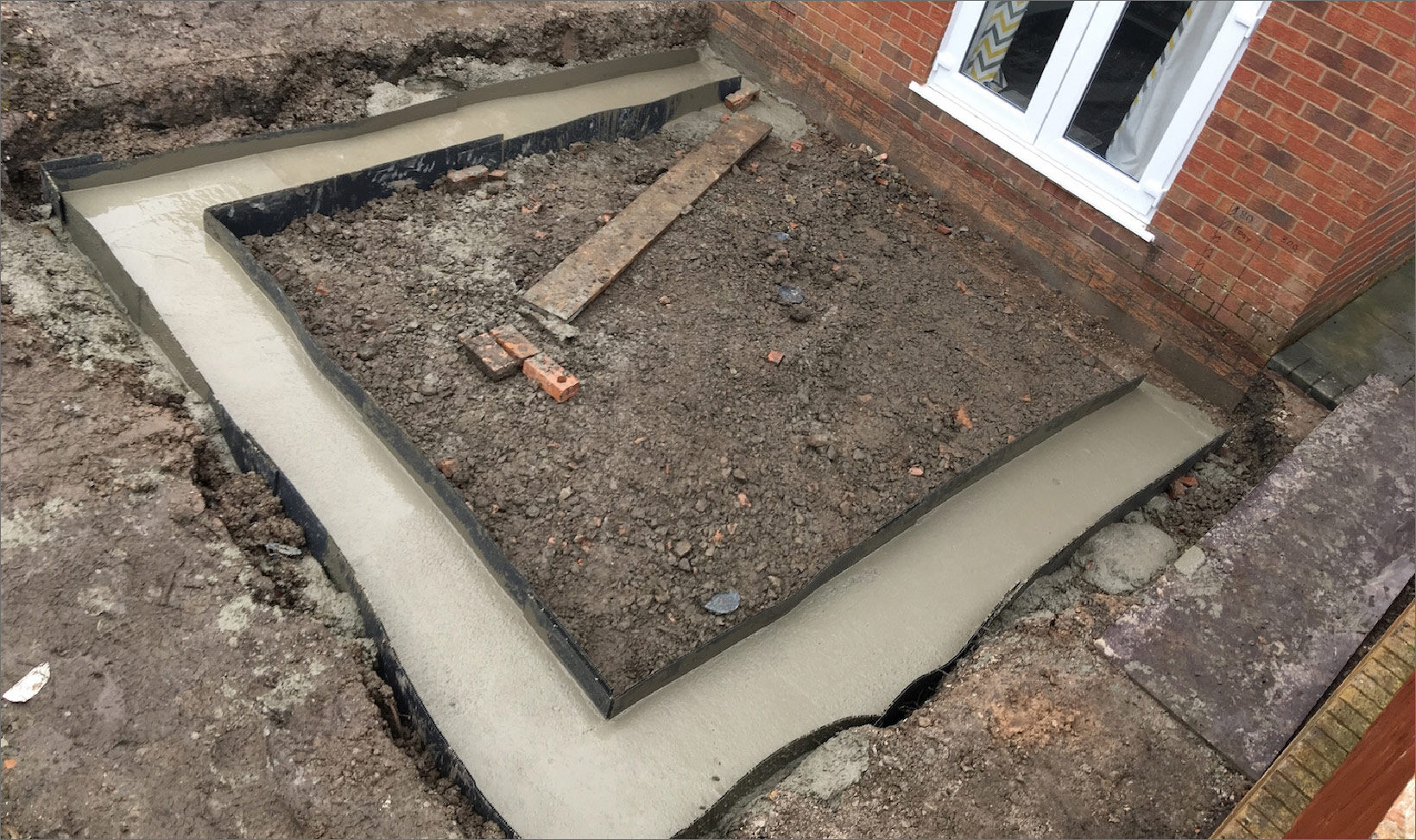
The Act considers any excavation within 3.00m of a shared or adjoining structure to be a potential risk if it goes deeper than the base of foundations to that structure. That distance increases to 6.00m for particularly deep excavation such as piling.
That risk can be alleviated buy ensuring that the trench is securely propped while open and filled as soon as possible. Where a foundation trench is particularly close to an adjoining structure, surveyors will request additional safeguards such as excavating in 1.00m long ‘hit and miss’ bays with the ‘missed’ bays only being excavated when the concrete used to fill those that have been excavated has fully cured.
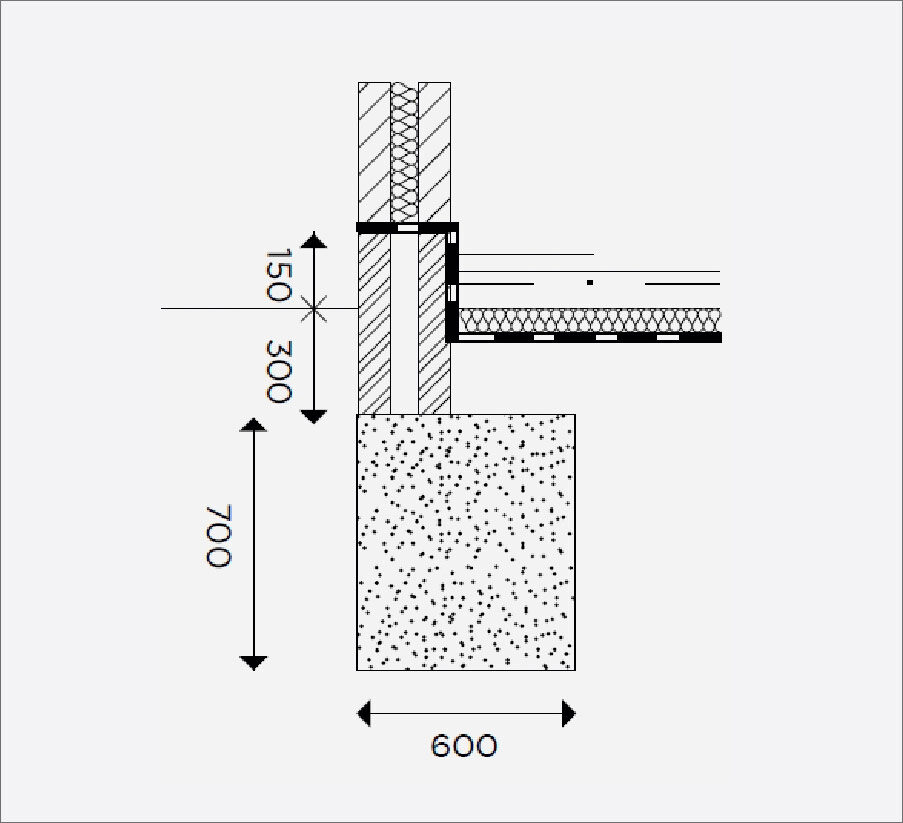
A new wall will generally be positioned at the centre of a foundation so that the load is distributed evenly but if that wall is built up to the boundary it will mean the concrete encroaches over the boundary by a few inches. That will make life difficult for the adjoining owner if they plan to build up to the boundary on their side in the future.
The solution is to use an eccentric foundation i.e. a wider foundation that allows the wall to be built to one side of it and avoids any encroachment. Party wall surveyors will always request an eccentric foundation in this scenario.
SIDE RETURN EXTENSION
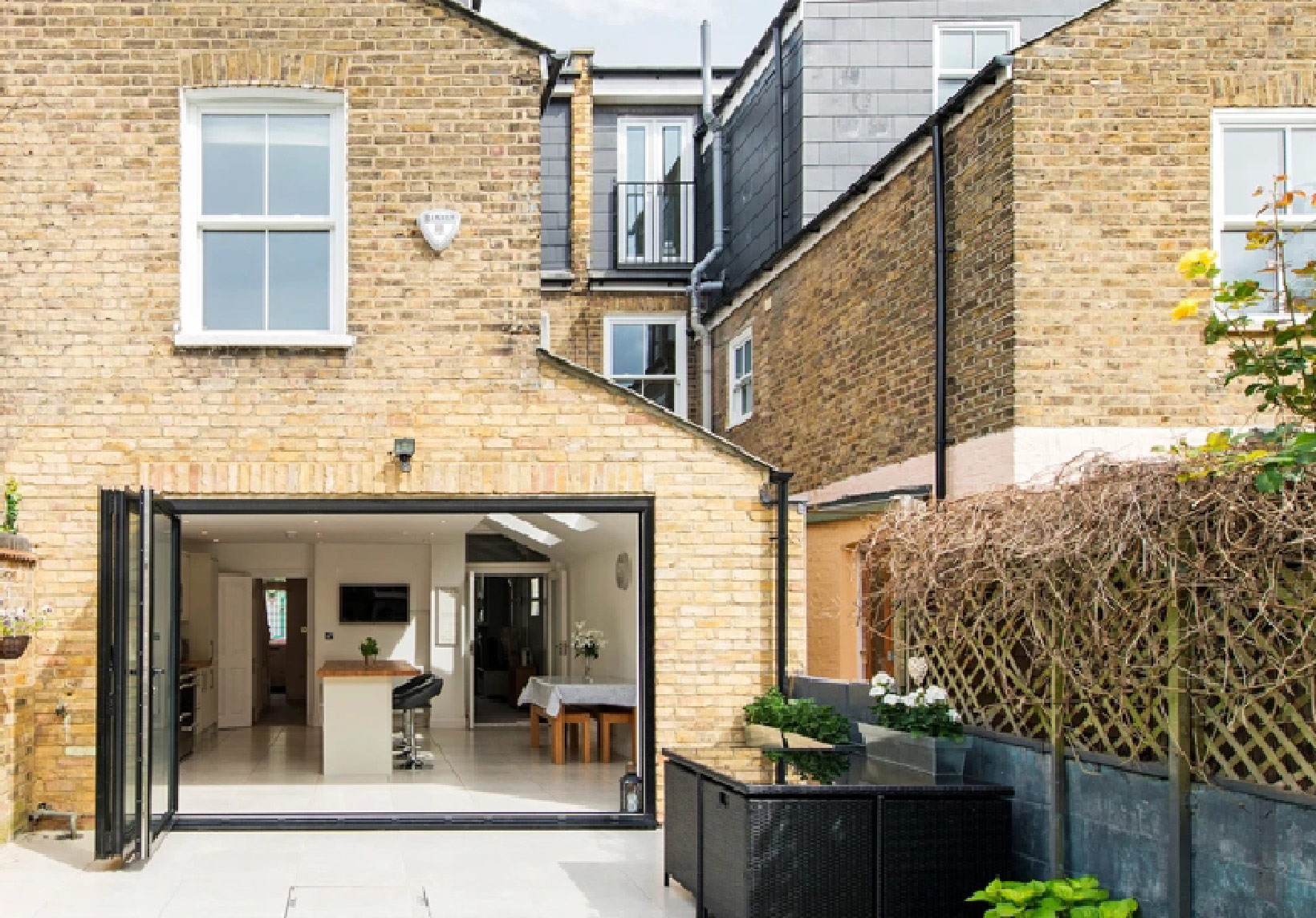
It is very common for an ‘L’ shaped Victorian property to be extended into what is referred to as the ‘side return’ area, effectively squaring it off at ground floor level.
A side return extension will involve excavating a foundation trench and constructing a new wall at the boundary (see above) but also presents a couple of additional issues.
The gardens of Victorian properties will often be divided by a shared brick wall (known as a ‘party fence wall’). As the wall is shared, each owner has the right to demolish and re-build it as part of any extension. This will benefit both owners as it maximises the internal space and potentially reduces the cost (the second owner only contributes if they make use of the wall). However, it’s important that the new wall is constructed in a way that makes it easy for the adjoining owner to make use of it. That is to say, there should be no projections beyond the face of the wall (such as gutters) and the design should allow the extension to be mirrored from the other side.
The Act provides a right of access where it is necessary to undertake notified works. Generally, that’s not an issue but when that access is over a narrow side return area it can be particularly inconvenient.
The adjoining owner’s property needs to be kept secure and its occupants safe throughout the work but the building owner also has an obligation to keep inconvenience to an absolute minimum. This may mean a narrower working space than would be ideal or moving protective hoarding back to the boundary at evenings and weekends. Paving should be protected during the works and any necessary disturbance made good to match the original materials.
If surveyors are involved, they should anticipate these issues and make them obligations to which the building owner is bound.
THE PROCESS
The building owner must formally notify affected neighbours of work falling within the scope of the Act and request their consent. If they do not consent, each party is obliged to appoint a surveyor or concur in the appointment of an Agreed Surveyor.
The surveyor(s) will authorise the building owner to undertake the works but only in a way that reduces the risk of damage as far as reasonably possible and does not cause unnecessary inconvenience to the adjoining occupiers. All of the safeguards, such as those described above, are set out in a document called a party wall award which is served on the owners prior to the works covered by the Act commencing. The owners have a legal obligation to comply with the award.


