
Loft Conversions and The Party Wall Act
Monday, 9th February 2026
Loft Space | Party Walls
Loft conversions and rear extension are the most common type of party wall related works that we assist owners with. I therefore thought it might be helpful for owners planning such works if I were to run through which aspects fall within the scope of the Act (and should be referenced on the notice(s)). I’ll cover loft conversions in this post, and rear extensions in a follow up.
As these works take place at roof level, they will not involve excavation or the construction of a new wall at the boundary. That only leaves work which has a direct effect on a party wall, meaning that loft conversions only fall within the scope of the Act if the subject property has at least one party wall i.e. it is a semi-detached or terraced property.
The two main structural tasks involved in converting a roof space are:
- Strengthening the floor (as the floor of a loft is not designed to take the load of people + furniture).
- Enlarging the space by constructing a dormer at the rear of the property (it’s not generally permitted to construct a dormer at the front of a property as it affects the ‘street scene’).
Strengthening the floor
‘Strengthening’ in this scenario generally means constructing a whole new floor over the existing (it would be disruptive to remove the existing as it also forms the ceiling of the rooms below). So, a new set of floor joists are installed but, as the span is generally such that very large section joists would be required, the space is divided up with structural beams to reduce that span.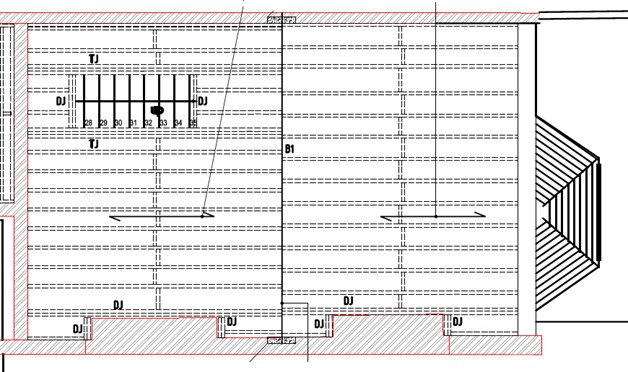
Those steel beams typically run from side to side, because it is the shortest span (meaning that the beams can be smaller and, therefore, cheaper), but that means that one or both ends of the beams must be supported on a party wall and that’s where we come to the work falling within the scope of the Act.
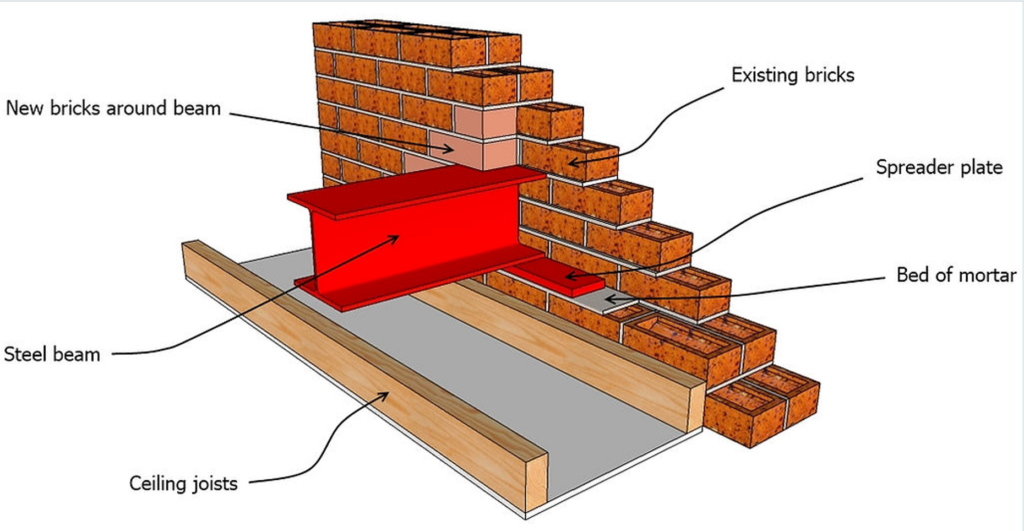
To support the beam, a pocket is cut into the party wall, large enough to accommodate both the beam and either a concrete padstone or steel plate to spread the load. This can be done without damaging the opposite side of the party wall as a party wall is generally 2 half bricks (or one whole brick) thick, and the pocket only needs to be half a brick deep. Once the beam is in place, the brickwork around it is made good.
Cutting into the party wall to form the pocket is a right provided by section 2(2)(f) of the Act.
2(2)(f) [A building owner shall have the following rights] – o cut into a party structure for any purpose (which may be or include the purpose of inserting a damp proof course)
Constructing the dormer
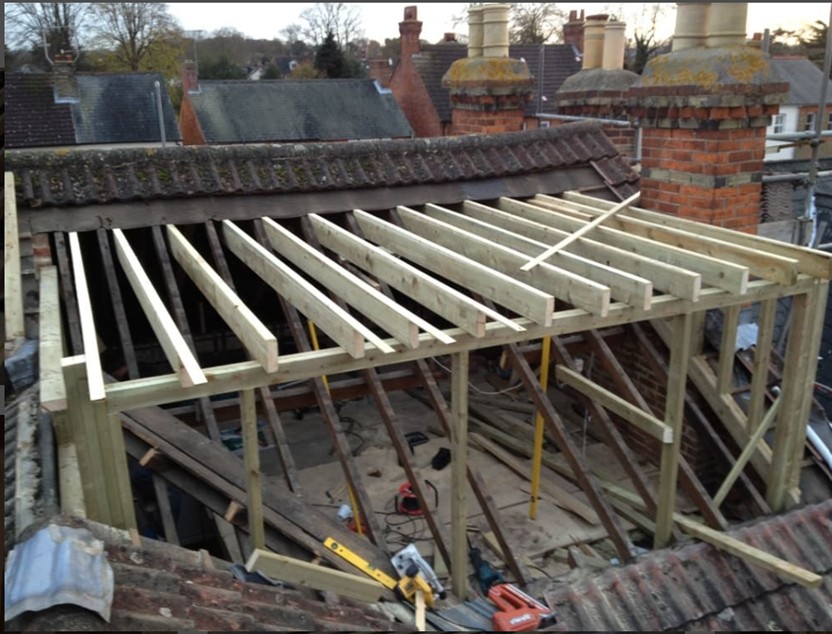
To form the dormer, the rear elevation of the existing roof is removed, and in the process, the party wall is exposed to the elements. Exposing a party wall which was hitherto enclosed is a right provided by section 2(2)(n) of the Act.
The right is subject to providing adequate temporary weathering and that is typically done by covering the ‘hole’ with either a temporary roof (sometimes called a ‘tin hat’) or tarpaulins.
Other notifiable works
Sometimes, to maximise the internal space, an owner will build up the party wall(s) and construct the dormer between them (see example below – unusually, to the front of a property).
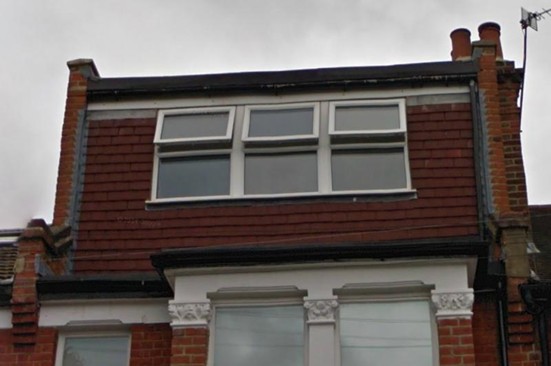
Raising a party wall is a right provided by section 2(2)(a) of the Act.
Finally, when converting a roof space, owners will often take the opportunity to remove any chimney breasts that are not in use to create additional floor space. The chimney stack will generally remain and be supported within the roof space (which is why it is often combined with a loft conversion).
Although chimney breasts are often constructed on either side of a party wall, and connect to a shared chimney stack, the flues are generally separate. It’s therefore possible to cut a chimney breast away from one side of a party wall without affecting a corresponding chimney breast on the opposite side.
Cutting a chimney breast away from a party wall is a right provided by section 2(2)(g) of the Act.
The notice period for all party structure works is 2 months.
If you are planning a loft conversion and require advice on party wall matters, you are welcome to contact us on 020 7183 2578 or via email. We can also prepare and serve the notices on your behalf for a flat fee of £75 plus VAT per adjoining owner.


